

Are you the “shock absorber” for your family and friends? If so, it’s possible you could develop plantar fasciitis. After all, the plantar fascia ligament serves as the “shock absorber” for our feet.
The plantar fascia ligament is a fibrous tissue that connects the heel bone to the toes while supporting the arch of the foot. It serves to hold structures together and keep them strong. If you strain your plantar fascia, though, the ligament gets weak, swollen, and irritated (inflamed), causing your heel or the bottom of your foot to hurt when you stand or walk.
When someone becomes the support system for everyone except himself or herself, it could possibly affect this ligament. In fact, individuals who have plantar fasciitis can be prone to absorb the “slings and arrows” of the world around them. They might feel responsible for holding everything together, thus taking on the job of keeping family, friends, and others around them stable.
Joy’s experience with plantar fasciitis.
A beautiful woman named Joy had tried everything she could think of to get relief from the extreme pain of plantar fasciitis. She came to me for a healing session to release the emotional component of this condition, eager for some help. The first question I asked was this: “Joy, are you being the ‘shock absorber’ for something that’s happening in your life?” She gave me a puzzled look and then confessed, “Yes I am. I have a dear friend who just lost her husband unexpectedly. I got right in there and have been trying to keep everything together for her. I have been the one absorbing the shock of it all.” What an “aha” moment for Joy.
She also said she was frustrated and angry because she was going through a difficult time with her son. She herself needed support but wasn’t getting it because she was so involved taking care of her friend.
Joy looked back and saw this as a pattern throughout her life. Happily, a couple of days after our healing session, she was back to walking normally again. Deleting that pattern from her life not only helped her feet but gave her freedom emotionally.
What happens when the emotional component of an ailment gets released? It can dramatically improve your life!
Joy's experience illustrates how exploring emotional patterns, alongside appropriate physical care, may provide additional insight for some individuals.
Physical and emotional causes of plantar fasciitis.
Plantar fasciitis is caused by straining the ligament that supports your arch, often causing tiny tears that can lead to pain and swelling. This condition commonly originates from tight calf muscles leading to prolonged and/or high velocity pronation of the foot. This in turn produces repetitive over-stretching of the plantar fascia, leading to possible inflammation and thickening of the ligament. As the fascia thickens, it loses strength and flexibility. Because this ligament is one of the major transmitters of weight across the foot when you walk or run, there is tremendous stress placed on it.
Your body responds to the way you think, feel, and act—the “mind/body connection.” When you are stressed, anxious, or upset, your body tries to tell you that something isn’t right. If you are the “shock absorber” and feel angry or “inflamed” about it, this thought pattern, repeated often, can inflame the plantar fascia to ensure you “get the message” through your body.
While plantar fasciitis has well-established physical causes, exploring emotional stressors may offer additional insight for some individuals.
If you have plantar fasciitis, chances are it will be extremley difficult to exercise until the inflamed tissue heals. This makes you take care of yourself. And until you do, you also aren’t able to be there making things okay for everybody else. Think of the stress from being the support for others while not being supported yourself.
According to Dr. Michael J. Lincoln who wrote Messages from the Body[1], the emotional component of calf muscles includes having a dramatic fear of the future along with anxiety leading to immobilization. Specifically, people fear taking action and moving forward. This also includes worry about not having what it takes to support themselves. Their attitude is reflected in statements like “leave well enough alone!” and “it’s bad enough as it is without making more trouble.”
Within this framework, plantar fasciitis affecting the right foot may be associated with deep conflicts over how to get support as well as concerns about relationships and commitment. Plantar fasciitis affecting the left foot may reflect being handicapped with vulnerability issues, unwilling to receive support, and refusing to allow others to be caretakers.
What can be done?
Individuals who are interested in exploring possible emotional contributors to plantar fasciitis may find it helpful to understand its emotional origin through the MO Technique. What is that?
It’s a methodology I’ve derived called the MO (Modus Operandi) Technique that helps people release negative emotions out of the subconscious mind. The technique then instills positive emotions into the super conscious mind and reprograms the conscious mind by changing outdated beliefs. It also helps people know they can change their imprinting and outdated belief system by instilling a new one. The MO Technique makes all of that possible.
For anyone with plantar fasciitis, the desired new belief system could be stated like this: “I’m going to support myself in a healthy way by not being responsible to make everything okay and stable for everyone else. I won’t continue to be the ‘shock absorber.’ Rather, I’ll allow others to support me and keep all of this in balance.”
Can you imagine the freedom of not having to be the sole person responsible to make sure everything is stable for others around you? With the right emotional support, the plantar fascia wouldn’t have to be the sole support or lose its flexibility and strength. It could do what it’s meant to do.
Allowing yourself to receive the support that’s needed (and craved) will help heal the entire body. The MO Technique shows how to achieve balance and accept support from others—no more sitting and seething.
As an Emotional Wellness Practitioner, I help people discover and examine the emotional links that may be overlooked in traditional healing approaches.
***
Disclaimer: Although this article depicts the “emotional component” or “thought pattern” of plantar fasciitis, I believe in a balanced approach to healing all ailments. Because the emotional component isn’t as readily available as traditional remedies, traditional remedies and treatments are not addressed in this article.
1Note: The psychological meaning of the symptoms, conditions, and disease presented in this article are from Messages from the Body: Their Psychological Meaning by Michael J. Lincoln Ph.D. used with his permission. Dr. Lincoln’s website is www.talkinghearts.net.
About the Author
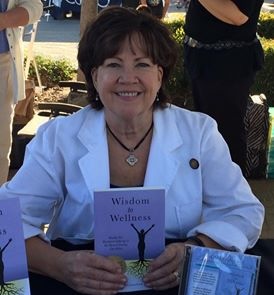
Maureen Minnehan Jones is a Registered Nurse, Modus Operandi Emotional Wellness Practitioner, Guided Imagery Practitioner, speaker, and author of Wisdom to Wellness: Healing Your Emotional Sufferings So the Physical Healing Can Follow. She is the creator of the Modus Operandi (MO) Technique™, a powerful tool for reprogramming the subconscious, superconscious, and conscious mind for lasting change. Learn more at www.maureenminnehanjones.com
Call me at 209-845-8141 to schedule your complimentary chat.
Support Holistix Online
We're advancing awareness and access for holistic health and wellness. Your contributions help us continue in our mission to connect consumers with wellness providers and build a supportive community for both holistic professionals and wellness seekers.
For a free alternative, you can add to our visibility and support us by leaving a Google Review about the articles we provide.